
Before the Deluge
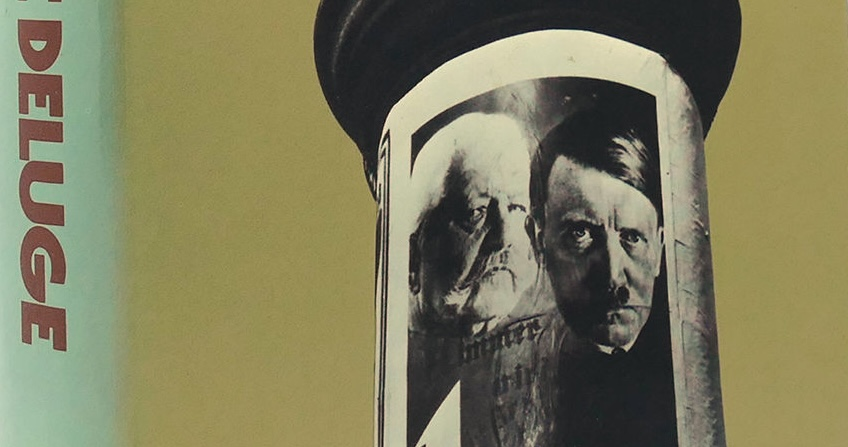
Some observers have blamed it on such technical causes as the German system of proportional representation. If Germany had used the American system of allotting each legislative seat to the candidate who wins the most votes within a specific district, the Nazis in 1930 would not have won more than twenty seats. Still, it seems dubious to argue after the game that the rules should have been changed. The fact remains that 6.5 Germans voted the Nazi ticket – and the figures were to get worse. Hitler had found a whole army of new supporters among a wide variety of discontented factions…
But was there was some deeper reason, some half-hidden national belief in the Nazi creed of violence, even some prophetic instinct for collective self-destruction? Dr. Franz Alexander, the first pupil at the Berlin Psychoanalytic Institute and later the director of a similar institute in Chicago, thought he saw the answer in some of his patients: “The occasionally open, mostly hidden, scorn and contempt many of my German patients held for the [Weimar regime] was too obvious to be overlooked…The national socialist movement – partially at least – was a rebellion…against the growing cosmopolitan, levelizing, super-national historical trend…It was a neurotic defense against loss of identity on a national scale…”
Other psychoanalysts, too, have tried in their various ways to explain the phenomenon. Erich Fromm, in Escape from Freedom, blamed the rise of Nazism on “the authoritarian personality,” which he considered typical of Germany’s lower middle class – “their love of the strong, hatred of the weak, their pettiness, hostility, thriftiness with feelings as well as with money, and essentially their asceticism.” To Wilhelm Reich, on the other hand, it seemed absurd to blame Nazism on any one class or nation. In The Mass Psychology of Fascism, he argued that Hitler’s movement was simply “the organized political expression of the structure of the average man’s character…There is not a single person who does not bear the elements of fascist feeling and thinking…In it’s pure form fascism is hte sum total of all the irrational reactions of the average human character.”
Perhaps it is too easy, though, to psychoanalyze a whole people, and so one makes an appointment to see Dr. Sandor Rado, who has spent a long lifetime in analyzing the unconscious and the irrational. Dr. Rado was already the head of the Berlin Psychoanalytic Institute when Dr. Alexander came there as a pupil, and it was Rado who undertook to perform the training analysis on Reich. He is very old now — “Do you know how old I am?” he asks – eighty, to be exact, a small man with a fringe of white hair and a protruding lower jaw and a very shiny skin. He lives in New York in an expensive apartment building just off Fifth Avenue, and he likes to go walking every day in Central Park.
“Why did the Nazis come to power?” the interviewer asks Dr. Rado. “Why did so many Germans vote for them?”
There is a long silence. It is a sunny April afternoon, but Dr. Rado’s rather cluttered library is dark. One notices that the backs of his hands are very freckled.
“That is not an easy question that you ask me,” Dr Rado says.
Another long silence. Dr. Rado stares into the dusk of his study, thinking. Finally, he decides on his answer. He speaks very slowly, very carefully.
“I don’t know,” says Dr. Rado.
Excerpt from Before the Deluge by Otto Friedrich, p 345-347.